Ingredients
Equipment
Method
- Crack the eggs into a small bowl. Add the milk and salt. Whisk vigorously for 30 seconds until the mixture is completely uniform, with no streaks of white. This ensures a smooth final texture.
- Set a non-stick skillet over medium-low heat. Add the butter and let it melt slowly. Swirl the pan to coat the bottom. The butter should foam gently, not brown.
- Pour the egg mixture into the pan. Let it sit undisturbed for 15-20 seconds until the edges just begin to set. The bottom will look pale yellow and opaque.
- Using a silicone spatula, gently push the cooked edges toward the center. Tilt the pan to let the uncooked liquid flow to the edges. Repeat this pushing motion every 10-15 seconds.
- When the eggs are about 70% set—still glossy and wet in places—remove the pan from the heat. The residual heat will finish cooking them. Continue to fold the curds gently for another 30 seconds.
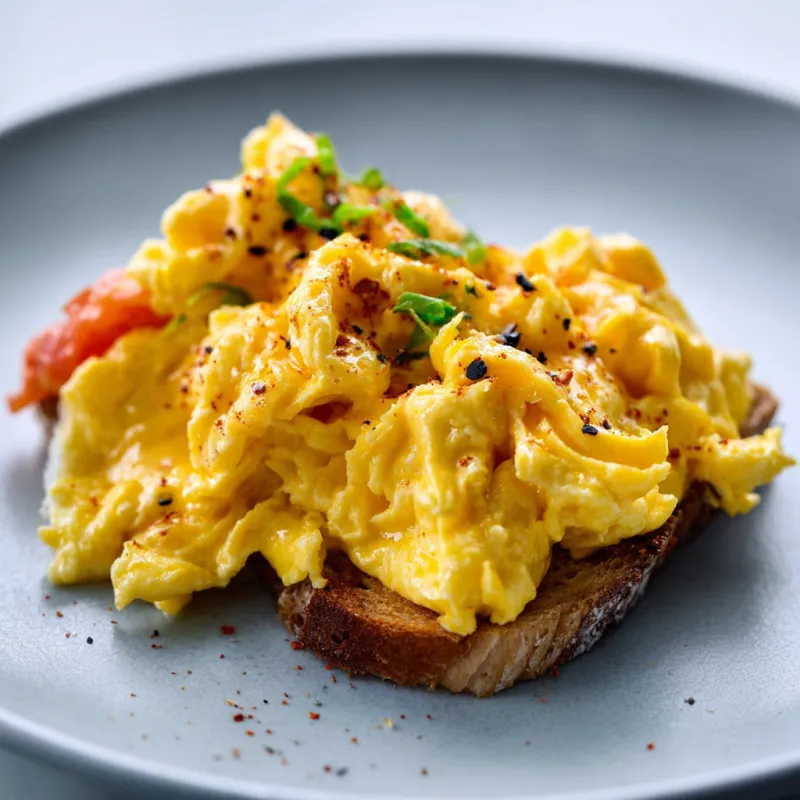
- The eggs should look soft, creamy, and slightly custard-like. Slide them onto a warm plate. They will continue to firm up slightly as they cool. Serve immediately.
Notes
For the softest texture, avoid high heat. If you prefer a firmer curd, cook 30 seconds longer on the heat, but stop before they look dry. Leftover eggs can be refrigerated for up to 1 day, but texture will firm up. Reheat gently in a pan with a splash of milk.