Sensory-Friendly Scrambled Eggs: Soft, Silky & Gentle
I remember the first time I made scrambled eggs that actually felt right. Not the dry, rubbery curds I’d grimaced through for years. But soft. Smooth. Almost creamy. The kind that slides off the fork without a fight. For anyone who struggles with food textures—especially those sudden, squeaky bits of overcooked egg—this recipe is for you.
Scrambled eggs seem simple. But the difference between a gentle, sensory-friendly meal and a plate of anxiety is just a few degrees of heat and a shift in technique. Let me walk you through the version I make when I need something that feels safe.
The Right Start: Eggs and Fat
Use two large eggs per person. That’s enough for a satisfying serving without leftovers that turn rubbery. Crack them into a small bowl and add one tablespoon of whole milk. The milk thins the egg just enough to prevent that dense, spongy texture. If you avoid dairy, unsweetened oat milk works beautifully—it adds a subtle sweetness and keeps the curds tender.
Add a tiny pinch of fine sea salt. Not for flavor alone. Salt helps break down the egg proteins slightly, which makes the final curd more tender. Whisk everything together for a full 30 seconds. I mean it. Set a timer if you need to. The mixture should look completely uniform, pale yellow, with a few tiny bubbles on top. No streaks of white. This step is where smoothness begins.
The Pan and Heat: Low and Slow
Choose a non-stick skillet. It’s non-negotiable for this texture. A stainless steel pan will stick and create rough, torn curds. Set the pan over medium-low heat. Let it warm up for a full minute. Then add one teaspoon of butter. Watch it melt slowly. It should foam gently, never brown. Brown butter smells nutty and lovely, but it changes the egg’s flavor and texture. For sensory-friendly eggs, we want clean, mild notes.
Pour the whisked eggs into the pan. Then—here’s the hardest part—do nothing for 15 to 20 seconds. Let the bottom set just enough to hold shape. The edges will turn pale yellow and opaque while the center stays liquid.
The Folding Technique: Gentle and Patient
Take a silicone spatula. Slide it under the cooked edge and push it gently toward the center. Tilt the pan so the uncooked egg runs to the empty space. Repeat this every 10 to 15 seconds. You’re not scrambling in the traditional sense—no frantic stirring. You’re folding the curds over themselves, building soft, pillowy layers.
The eggs will look wet and glossy for most of the cooking time. That’s good. When they are about 70 percent set—still shiny, with some liquid pooling—pull the pan off the heat. The residual heat from the pan will finish cooking them. Continue folding for another 30 seconds. The curds will tighten slightly but stay soft.
Common mistake to avoid: Leaving the pan on the burner until the eggs look fully dry. By then, they are already overcooked. Stop early. Trust the carryover cooking.
What to Look For
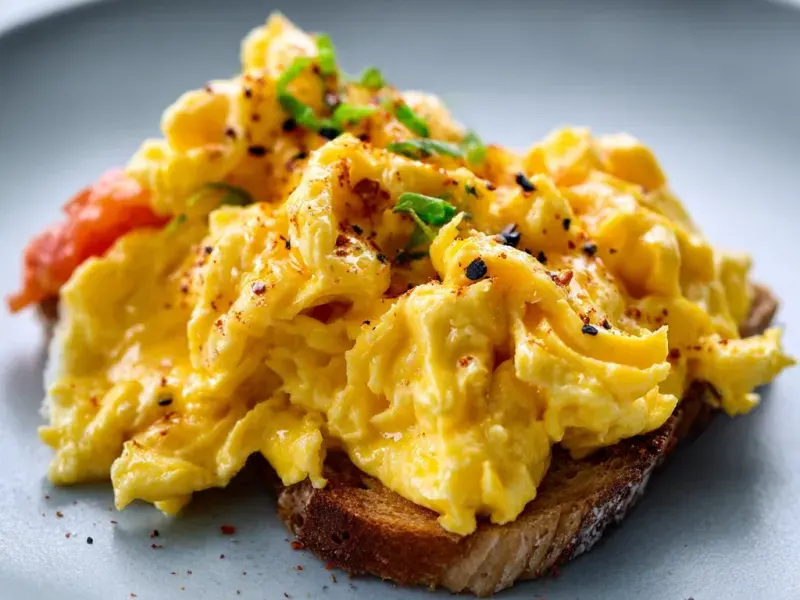
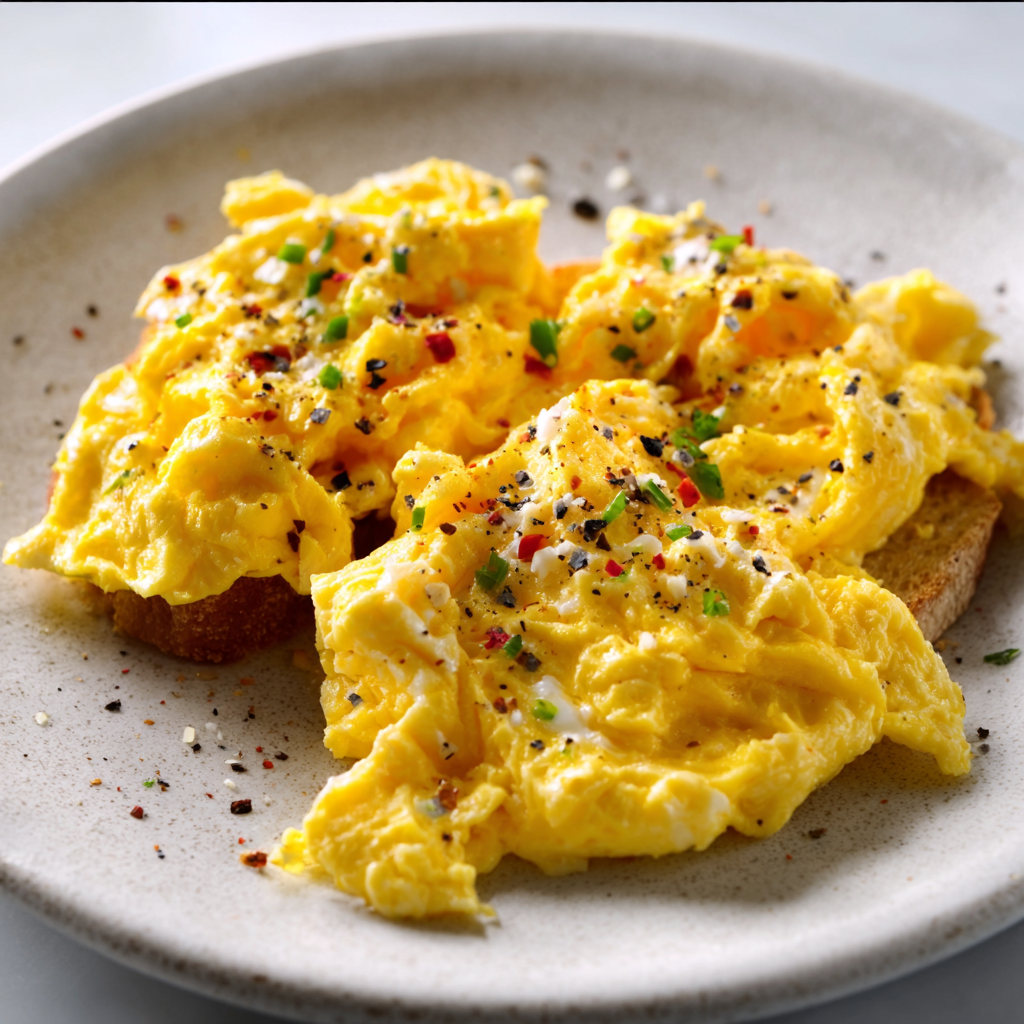
The finished eggs should look like pale yellow clouds. They should hold their shape when spooned but break apart with almost no pressure. No brown spots. No dry edges. No squeaky curds. The texture should be consistent throughout—no rubbery bits hiding in the middle.
If you want to test doneness without a thermometer, lift a small curd with the spatula and press it gently. It should feel soft and give slightly, like a firm custard. If it springs back or feels bouncy, it’s overdone.
Serving and Keeping
Slide the eggs onto a warm plate. Cold plates can shock the eggs and make them firm up too fast. Serve right away. If you need to reheat leftovers, do it gently in a non-stick pan over low heat with a splash of milk, stirring just until warm. Microwaving will turn them rubbery.
These eggs pair well with soft gluten-free toast, a simple smoothie, or even just a spoon. Yes, a spoon. Sometimes the easiest way to eat is with a utensil that feels familiar.
A Final Note
Food texture is personal. What feels safe to one person might not work for another. This recipe is a starting point—a gentle baseline you can adjust. If the curds are too soft for you, cook them 20 seconds longer on the heat. If they’re too firm, pull the pan off earlier. You know your body best.
For any specific dietary concerns or health decisions, please consult a qualified professional who understands your individual needs.
Frequently Asked Questions
Why do my scrambled eggs turn out rubbery?
Rubbery eggs usually come from high heat or overcooking. Cook over medium-low heat and remove the pan from the burner while the eggs are still slightly wet. The residual heat finishes them gently.
Can I make these eggs without milk?
Yes. You can omit the milk or use a splash of water. The eggs will be slightly less creamy but still soft. For a dairy-free version, use unsweetened oat milk or a teaspoon of dairy-free butter.
How do I know when the eggs are done?
Look for a soft, custard-like curd that holds its shape but still looks moist and glossy. They should not be dry or watery. If you use a thermometer, aim for 160°F (71°C) for food safety, but the visual cue is more reliable.
Sensory-Friendly Scrambled Eggs

A gentle, silky scrambled egg recipe designed for sensory-sensitive eaters, with a soft, uniform curd and no rubbery bits.
- non-stick skillet
- silicone spatula
- small bowl
- whisk
- digital thermometer (optional)
- 2 large eggs
- 1 tablespoon whole milk (or unsweetened oat milk for dairy-free)
- 1 teaspoon unsalted butter (or dairy-free butter)
- Pinch of fine sea salt
- Crack the eggs into a small bowl. Add the milk and salt. Whisk vigorously for 30 seconds until the mixture is completely uniform, with no streaks of white. This ensures a smooth final texture.
- Set a non-stick skillet over medium-low heat. Add the butter and let it melt slowly. Swirl the pan to coat the bottom. The butter should foam gently, not brown.
- Pour the egg mixture into the pan. Let it sit undisturbed for 15-20 seconds until the edges just begin to set. The bottom will look pale yellow and opaque.
- Using a silicone spatula, gently push the cooked edges toward the center. Tilt the pan to let the uncooked liquid flow to the edges. Repeat this pushing motion every 10-15 seconds.
- When the eggs are about 70% set—still glossy and wet in places—remove the pan from the heat. The residual heat will finish cooking them. Continue to fold the curds gently for another 30 seconds.
- The eggs should look soft, creamy, and slightly custard-like. Slide them onto a warm plate. They will continue to firm up slightly as they cool. Serve immediately.
For the softest texture, avoid high heat. If you prefer a firmer curd, cook 30 seconds longer on the heat, but stop before they look dry. Leftover eggs can be refrigerated for up to 1 day, but texture will firm up. Reheat gently in a pan with a splash of milk.
Recipe: Sensory-Friendly Scrambled Eggs
Equipment
- non-stick skillet
- silicone spatula
- small bowl
- whisk
- digital thermometer (optional)
Ingredients
- 2 large eggs
- 1 tablespoon whole milk (or unsweetened oat milk for dairy-free)
- 1 teaspoon unsalted butter (or dairy-free butter)
- Pinch of fine sea salt
Instructions
- Crack the eggs into a small bowl. Add the milk and salt. Whisk vigorously for 30 seconds until the mixture is completely uniform, with no streaks of white. This ensures a smooth final texture.
- Set a non-stick skillet over medium-low heat. Add the butter and let it melt slowly. Swirl the pan to coat the bottom. The butter should foam gently, not brown.
- Pour the egg mixture into the pan. Let it sit undisturbed for 15-20 seconds until the edges just begin to set. The bottom will look pale yellow and opaque.
- Using a silicone spatula, gently push the cooked edges toward the center. Tilt the pan to let the uncooked liquid flow to the edges. Repeat this pushing motion every 10-15 seconds.
- When the eggs are about 70% set—still glossy and wet in places—remove the pan from the heat. The residual heat will finish cooking them. Continue to fold the curds gently for another 30 seconds.
- The eggs should look soft, creamy, and slightly custard-like. Slide them onto a warm plate. They will continue to firm up slightly as they cool. Serve immediately.