
I’ll never forget the first time I tried to make gluten-free spaghetti and meatballs for my family. The meatballs crumbled into a sad, greasy mess, and the pasta turned into a sticky blob before it even hit the plate. My kids stared at their bowls like I’d served them science experiment. I wanted to cry.

But here’s the thing about cooking for picky eaters: you learn fast. Over the years, I’ve cracked the code on tender, juicy meatballs that hold together without a speck of wheat, and pasta that actually tastes like pasta. This is that recipe—the one my kids now request for birthday dinners and lazy Sunday nights alike.
The Secret to Tender Gluten-Free Meatballs
The biggest mistake I see? Using too much breadcrumb. Gluten-free breadcrumbs soak up moisture differently than traditional ones. They’re thirsty little sponges. If you add the same amount you’d use in a wheat-based recipe, your meatballs will turn out dry and dense.
My ratio: for every pound of meat, use just ½ cup of finely ground gluten-free breadcrumbs. And I mean finely ground—store-bought panko-style crumbs are too coarse. Pulse them in a food processor for 10 seconds if needed. This finer texture blends seamlessly into the meat, creating a tender crumb without any grittiness.
The second trick is using a mix of ground beef and pork. Beef gives you that classic meatball flavor, but pork adds fat and moisture that keeps everything from drying out during simmering. If you only have beef on hand, choose 80/20—the extra fat matters here.
Mixing Without Overworking
Here’s where most home cooks go wrong: they overmix. I get it—you want everything evenly distributed. But overworking the meat mixture develops too much protein structure, and you end up with tough, rubbery meatballs. Use your hands (it’s the only way to feel when it’s ready) and mix just until the ingredients come together. Stop the second you don’t see any more dry breadcrumb patches.
Roll the meatballs gently, too. I use a light touch, barely pressing the meat into shape. If you squeeze them tight, they’ll be dense. Aim for 1½ inches in diameter—big enough to stay juicy but small enough to cook through in the sauce.
Building the Sauce (No Jar Needed)
I’m not here to shame jarred sauce. Some days you need it. But this sauce comes together in the same pan you brown the meatballs in, and it takes maybe two extra minutes. The payoff is huge.
After you brown the meatballs (just 2-3 minutes per side until golden—don’t cook them through yet), remove them and pour in your tomatoes. Here’s the key: scrape up those browned bits from the bottom of the pan. That’s concentrated meat flavor, and it’ll infuse your sauce in a way no jar ever can.
I use one 28-ounce can of crushed tomatoes plus one 15-ounce can of tomato sauce. The crushed tomatoes give body, while the sauce keeps it smooth enough for little mouths. A pinch of sugar balances the acidity—especially important with canned tomatoes. Don’t skip it.
Why Simmering Matters
This is the step you can’t rush. Return the meatballs to the sauce, cover, and let everything simmer on low for a full 20 minutes. Not 10, not 15. Twenty. The meatballs finish cooking gently in that warm tomato bath, absorbing flavor while staying tender. The sauce thickens and deepens as it goes.
If you’re tempted to crank the heat to speed things up, don’t. High heat will toughen the meatballs and break the sauce’s emulsion. Low and slow is your friend here.
The Pasta Problem (Solved)
Gluten-free pasta has come a long way, but it still demands attention. The biggest mistake? Overcooking. Check the package directions and set a timer for one minute less than the recommended time. Gluten-free pasta goes from al dente to mush in about 90 seconds flat.
I also save a cup of the pasta cooking water before draining. That starchy water is liquid gold—add a splash to your sauce if it seems thick, and toss it with the pasta to keep it from clumping. My kids won’t eat pasta that’s stuck together in a brick, and frankly, neither will I.
Brown rice pasta is my go-to for this dish. It holds its shape, has a neutral flavor, and doesn’t turn into a gummy mess. Quinoa pasta works too, but it’s a bit more delicate.
Getting It on the Table Without the Meltdown
Here’s my real-mom strategy: I make the meatballs and sauce earlier in the day (or even the night before). The sauce actually improves after a day in the fridge—the flavors meld together beautifully. When dinner time hits, I just boil the pasta and reheat the sauce. Total active time: 10 minutes.
If your kids are super picky about texture, serve the sauce and meatballs on the side and let them add as much as they want. My youngest prefers her spaghetti barely sauced—more like pasta with a drizzle. Fine by me. She’s eating.
I also keep a bowl of grated Parmesan on the table. Something about letting them sprinkle their own cheese makes the whole meal feel more fun. It’s a small thing, but it works.
One Last Thing
This recipe is naturally free of the top allergens (wheat/gluten), but if you’re cooking for someone with celiac disease or a severe allergy, please double-check your ingredient labels. Some brands of tomato products and Parmesan cheese may contain traces of gluten. When in doubt, consult your doctor or a registered dietitian for personalized advice.
Now go make these meatballs. Your family will thank you—even the picky one.
Frequently Asked Questions
Can I make these meatballs dairy-free?
Yes. Omit the Parmesan cheese or use a dairy-free grated Parmesan alternative. The meatballs will still be tender and flavorful.
Why are my gluten-free meatballs falling apart?
Gluten-free breadcrumbs absorb moisture differently than wheat breadcrumbs. Make sure you’re using finely ground breadcrumbs, and don’t skip the egg—it acts as a binder. Also, handle the meat gently and let the meatballs rest for 5 minutes before browning.
Can I use a different gluten-free pasta?
Absolutely. Brown rice, quinoa, chickpea, or lentil pasta all work well. Just cook according to package directions and don’t overcook—gluten-free pasta can get mushy fast.
How do I know when the meatballs are fully cooked?
Use an instant-read thermometer inserted into the center of a meatball—it should read 160°F (71°C). Or cut one open; there should be no pink inside and juices should run clear.
Can I freeze this entire dish?
Yes. Cooked spaghetti and meatballs freeze well together. Let cool completely, then transfer to a freezer-safe container. Thaw overnight in the fridge and reheat gently on the stovetop or microwave.
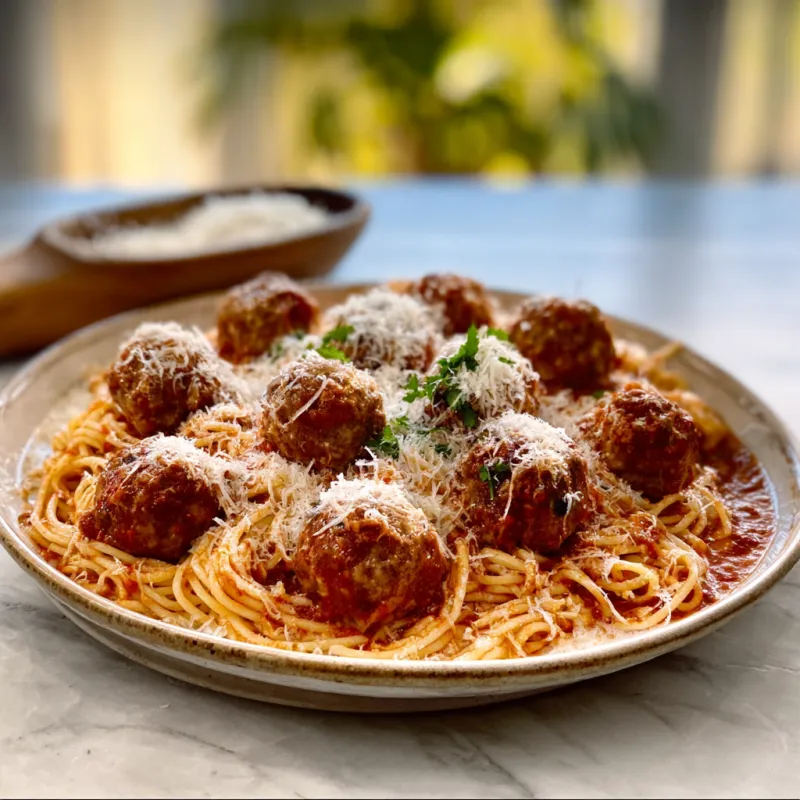
Easy Family Gluten-Free Spaghetti and Meatballs
Ingredients
Equipment
Method
- In a large bowl, combine ground beef, ground pork, breadcrumbs, Parmesan, egg, minced garlic, oregano, salt, and pepper. Mix gently with your hands until just combined—overmixing makes tough meatballs.
- Roll mixture into 1.5-inch meatballs (about 24 total). Place them on a baking sheet lined with parchment.
- Heat olive oil in a large skillet over medium-high heat. Add meatballs in a single layer (work in batches if needed). Cook 2-3 minutes per side until browned all over. They don't need to be cooked through yet.
- Remove meatballs to a plate. Reduce heat to medium. Add crushed tomatoes and tomato sauce to the skillet. Stir in sugar and dried basil. Scrape up any browned bits from the bottom—that's flavor.
- Return meatballs to the sauce. Bring to a gentle simmer, then reduce heat to low. Cover and cook for 20 minutes, stirring occasionally, until meatballs are cooked through and sauce has thickened.
- Meanwhile, bring a large pot of salted water to a boil. Cook spaghetti according to package directions until al dente. Drain, reserving 1/2 cup pasta water.
- Toss spaghetti with a little sauce and pasta water if needed to loosen. Serve meatballs and sauce over spaghetti. Top with Parmesan and fresh herbs if desired.